The Human Edge: Why Your Independent Wine Retailer Outsmarts Any Recommendation Engine
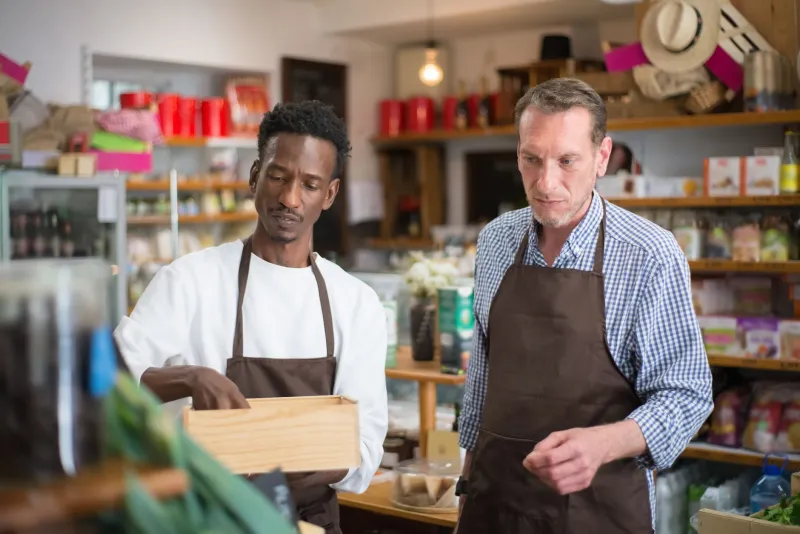
There is a particular kind of conversation that happens in good independent wine shops. It begins with a question — not "What's your budget?" but something closer to "What did you eat last Tuesday?" or "Are you celebrating something, or just unwinding?" The retailer behind the counter is not running a query. They are doing something considerably more sophisticated: they are listening for the information you do not know you are providing.
Algorithms, for all their processing power, are fundamentally reactive. They respond to what you have already purchased, already rated, already clicked. The independent wine retailer, by contrast, is anticipatory. They are building a mental model of who you are as a drinker — your tolerances, your aspirations, your blind spots — and using that model to guide you somewhere you have not yet been.
The Questions That Reveal Everything
Sarah Howell, who has operated a boutique wine shop in Portland, Oregon for eleven years, describes her opening consultation as something closer to a conversation about lifestyle than about wine. "I want to know what they cook at home, whether they drink wine with dinner or after dinner, whether they are usually alone or entertaining," she explains. "Someone who drinks a glass on a weeknight while making pasta has entirely different needs than someone who is building a collection to share with friends over a long meal."
This line of questioning would be unremarkable in a doctor's office or a tailor's fitting room. In wine retail, it remains relatively rare — and disproportionately valuable. The data that emerges from these exchanges is qualitative in nature: it describes texture, occasion, mood, and aspiration. It is precisely the kind of data that purchase histories and star ratings cannot capture.
Marco Reyes, who runs a small shop in Austin, Texas, puts it more bluntly. "An algorithm knows you bought a Malbec twice. I know you bought a Malbec because your college roommate was visiting and he always orders Malbec. That tells me almost nothing about what you actually like."
Regional Intuition and the Limits of Nationwide Data
One of the less-discussed advantages of the independent retailer is geographic specificity. A recommendation engine trained on national purchasing data reflects national averages — which is to say, it reflects no particular place at all. A retailer embedded in a specific community accumulates something far more granular: a working knowledge of how local tastes, local cuisines, and local climates shape what people actually reach for.
Howell notes that her Portland clientele skews toward wines with higher acidity and lower residual sugar than national benchmarks would suggest. "There's a food culture here that's very ingredient-focused, and people want wines that don't compete with the food. I stock accordingly, and I recommend accordingly. A platform that's optimizing for the whole country is going to miss that entirely."
This regional attunement extends to seasonal patterns as well. Reyes describes a marked shift in his Austin customer base toward lighter, higher-acid wines in the summer months — Vermentino, Albariño, Grüner Veltliner — driven not by trend cycles but by the practical reality of drinking wine in Texas heat. "I started keeping those bottles better stocked in April, and it made a real difference. That's not something you get from a national algorithm. That's just paying attention."
Curation as an Act of Intellectual Commitment
The word "curated" has been so thoroughly absorbed into marketing language that it has lost most of its original meaning. In the context of an independent wine retailer, however, curation retains genuine significance. Every bottle on the shelf represents a decision — a decision made by a human being who tasted the wine, assessed its quality relative to its price, and judged it worthy of a recommendation to people they know personally.
This is categorically different from the algorithmic version of curation, which is more accurately described as filtering. A platform can narrow a catalog of ten thousand wines down to fifty based on your stated preferences. What it cannot do is tell you that the Sicilian Nero d'Avola in the corner is overperforming at its price point this vintage, or that the Burgundy producer whose wines you loved two years ago has had a change in winemaking staff and the most recent releases are not worth the premium.
This kind of intelligence is perishable. It requires ongoing engagement with producers, distributors, and the wines themselves. It is, in the truest sense, expertise — and expertise does not scale the way software does.
The Discovery Experience That Data Cannot Engineer
Perhaps the most compelling argument for the independent retailer is the discovery experience itself. Being handed a bottle by someone who says, "I think you're going to find this surprising" — and then being right — produces a kind of trust that is genuinely difficult to replicate through a recommendations carousel.
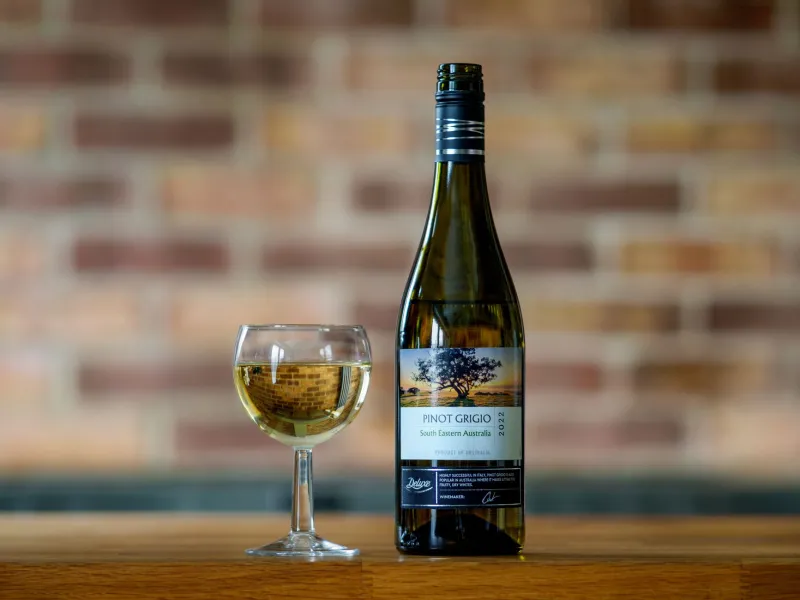
Howell describes a customer who came in looking for "something like Pinot Grigio" and left with a bottle of Txakoli, a lightly sparkling Basque white that she had never heard of. "She came back two weeks later and bought three more bottles. That would never have happened if she'd typed 'wines similar to Pinot Grigio' into a search bar. The algorithm would have given her another Pinot Grigio."
This is the distinction that matters most: the independent retailer is not trying to satisfy a stated preference. They are trying to expand it.
How to Get the Most From Your Local Shop
Building a productive relationship with an independent wine retailer is less complicated than it sounds. A few practices make a meaningful difference.
Be honest about what you did not enjoy. Negative feedback is more useful than positive feedback. If a retailer knows a wine missed the mark, they can recalibrate far more precisely than if they only know what landed.
Describe context, not just taste. "I want something for a dinner party where half the guests don't drink wine" is far more useful information than "I want something medium-bodied."
Ask about what's new in the shop. Retailers are often most excited about recent arrivals, and that enthusiasm frequently translates into genuine insight about why a particular bottle is worth your attention right now.
Return with a verdict. The feedback loop is everything. A retailer who knows how a recommendation landed is a retailer who becomes progressively better at recommending to you specifically.
The Case for Both
None of this is an argument against the convenience of online wine purchasing. Platforms like Bebo Vino serve a genuine purpose: they make it possible to access bottles that no local shop would stock, to compare options across a broad range, and to receive wines directly at your door with detailed tasting notes and educational context. The two experiences are not in competition — they are complementary.
What the independent retailer offers is irreplaceable precisely because it is inefficient. It takes time, it requires conversation, and it depends on the accumulated judgment of a specific human being who has chosen to spend their professional life thinking carefully about wine. That inefficiency is not a flaw. It is the entire point.