One Number, Infinite Insight: What a Wine's Alcohol Percentage Reveals Before You Take a Sip
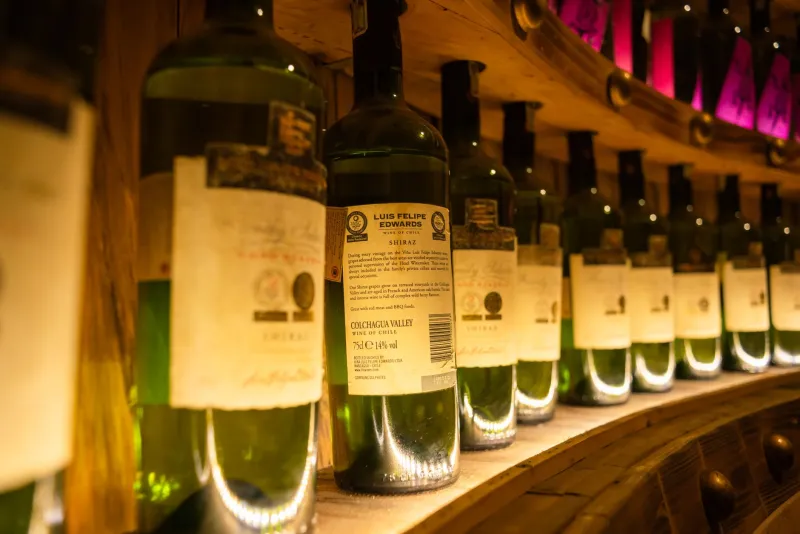
Spend any time around a serious wine professional and you will notice something curious. Before they read the vintage, before they study the producer's name, many of them glance at the bottom-right corner of the label — at that modest percentage figure most consumers barely register. Alcohol by volume, or ABV, is one of the most information-dense details on any wine bottle, and most American drinkers walk right past it.
That oversight is understandable. The wine industry does not exactly advertise ABV as a decision-making tool. It appears in small print, surrounded by more visually compelling information — the estate name, the appellation, perhaps an image of a European château or a California hillside. But strip away the marketing and that number tells you a great deal about what is waiting inside.
Why Alcohol Content Is a Structural Blueprint
Alcohol in wine is not an additive. It is a byproduct of fermentation — specifically, the conversion of grape sugars into ethanol by yeast. The higher the sugar content of the harvested grapes, the more potential alcohol exists. Winemakers can influence the final ABV through decisions about harvest timing, fermentation management, and in some regions, chaptalization (the addition of sugar before fermentation to boost alcohol in cool-climate vintages). But at its core, ABV reflects the ripeness of the fruit.
This connection between ripeness and alcohol creates a predictable relationship between that percentage and the sensory experience you can expect in the glass.
Wines in the lower ABV range — roughly 11.5% and below — tend to come from cooler climates or earlier harvests. Think German Riesling, Muscadet from the Loire Valley, or Italian Prosecco. These wines typically express higher acidity, lighter body, and more delicate fruit. They are rarely overwhelming, and they age in ways that emphasize mineral complexity rather than richness.
Mid-range wines, from about 12% to 13.5%, represent the broadest and most familiar category for American drinkers. Most Burgundy, many Bordeaux, a significant portion of domestic Pinot Noir, and a wide range of Spanish Tempranillos fall here. These wines balance fruit expression with structure, making them versatile at the table and approachable without being simple.
High-ABV wines — 14% and above — are where things get bold. Napa Valley Cabernet Sauvignon, Zinfandel, Australian Shiraz, and many Châteauneuf-du-Pape bottlings routinely reach 15% or beyond. These wines are fuller-bodied, richer in texture, lower in perceived acidity, and more intense in flavor. They can be extraordinary, but they require thoughtful pairing and, for many drinkers, careful portioning.
How ABV Shapes What You Actually Taste
Alcohol affects wine perception in ways that go well beyond a warming sensation in the chest. At higher concentrations, ethanol amplifies the perception of body — that sense of weight and viscosity on the palate. It also tends to suppress the brightness of acidity and push fruit flavors toward riper, more concentrated expressions. Tannins in high-alcohol red wines can feel softer and rounder than the same grape variety produced in a cooler vintage.
This is why two bottles of Cabernet Sauvignon — one from Napa at 15.2% and one from Bordeaux at 13% — can taste like fundamentally different wines even when made from the same grape. The alcohol level is not just a measurement of ethanol; it is a signal of stylistic philosophy, climate, and winemaking intent.
For drinkers who find themselves sensitive to the warming, slightly sweet sensation that very high-alcohol wines can produce, ABV scanning becomes a practical skill almost immediately. Staying below 13.5% when exploring unfamiliar bottles is a reasonable heuristic for those who prefer elegance over opulence.
The Pairing Equation Nobody Talks About
Food pairing guides spend considerable energy on flavor matching — acidity with fat, tannin with protein, sweetness with spice. ABV is rarely part of that conversation, and it should be.
High-alcohol wines intensify the perception of heat in spicy dishes. If you are ordering a wine to accompany Thai food, Korean barbecue, or a Sichuan preparation, reaching for a 15% Zinfandel is likely to amplify the burn rather than complement the meal. A lower-alcohol wine — a Riesling Spätlese at 9%, a Vinho Verde at 10.5% — will feel far more harmonious.
Conversely, lighter wines can disappear next to rich, fatty dishes. A delicate 11% Pinot Grigio alongside a ribeye with bone marrow butter will simply vanish. The dish overwhelms the wine, and neither benefits. A fuller, higher-alcohol red with the structural weight to match the dish's richness is a better choice.
Professional sommeliers often think about pairing in terms of "weight matching" — ensuring that the weight of the wine and the weight of the dish are roughly equivalent. ABV is one of the fastest proxies for wine weight that exists.
Aging Potential and the ABV Factor
Alcohol also plays a role in how wines develop over time. Higher alcohol content acts as a mild preservative, which is one reason that fortified wines like Port and Madeira — with ABVs ranging from 17% to 20% — can age for extraordinary lengths of time. Among table wines, higher alcohol levels can support longer cellaring in full-bodied reds, though very high ABV without sufficient acidity and tannin can lead to wines that feel flat rather than complex after extended aging.
Lower-alcohol wines with high acidity — particularly white wines — often age more gracefully than their richer counterparts. The acidity acts as a structural backbone, while the relatively modest alcohol allows the wine's other components to evolve without the heaviness that very ripe, high-octane wines can develop.
If you are selecting bottles from our curated collections with an eye toward the cellar, ABV is worth noting alongside vintage and producer reputation.
Practical Application: Reading the Label Before You Buy
Here is how to put this into practice when browsing for your next bottle:
- Scanning for a dinner wine? Identify the weight of your planned meal first. Light fish dishes call for wines under 13%. Grilled meats and braises can handle 13.5% to 14.5%.
- Buying for a group with varied preferences? Mid-range ABV wines — 12.5% to 13.5% — tend to have the broadest appeal.
- Looking for something to enjoy on its own, without food? Very high-alcohol wines (above 14.5%) can feel unbalanced without food to anchor them. Lower-to-mid-range options are typically more pleasant as aperitifs or standalone sippers.
- Purchasing for the cellar? Note ABV alongside acidity and tannin information in tasting notes. Balance matters more than any single metric.
The ABV figure is not a quality judgment. A 9% Mosel Riesling Auslese can be one of the most profound wine experiences available at any price point. A 16% Amarone della Valpolicella can be equally transcendent. The percentage tells you about style, not merit.
What it gives you, reliably, is orientation — a sense of what kind of experience you are about to have before the foil is cut and the cork is drawn. That is not a small thing. In a category as vast and varied as wine, any reliable signal is worth learning to read.