Why the First Sip Deceives You: The Science of Palate Adaptation and How to Taste More Honestly
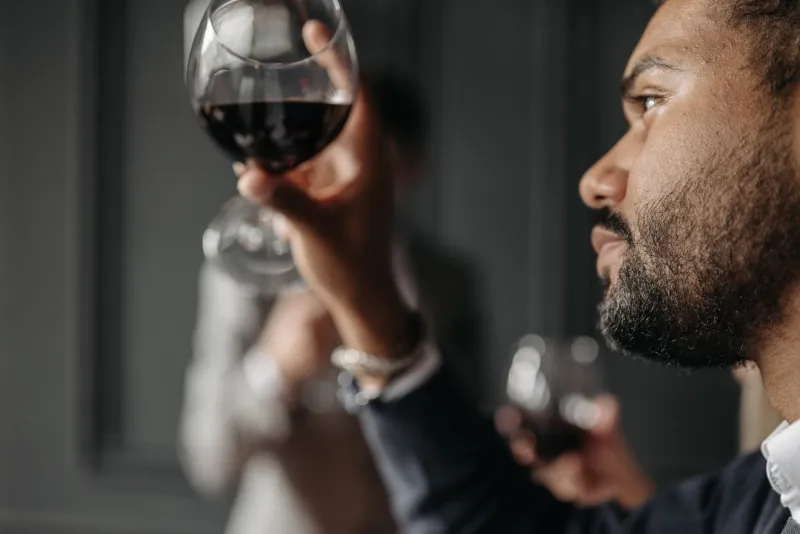
There is a moment familiar to nearly every wine drinker: you pour a glass, raise it to your lips with genuine anticipation, and the wine lands on your palate in a way that feels almost wrong. Too sharp, too tight, too alcoholic. Then, ten minutes later, the same wine seems to have transformed entirely — rounder, more expressive, almost generous. You haven't changed the bottle. You haven't added water or decanted into a new vessel. Yet the wine tastes categorically different.
This is not imagination. It is biology, psychology, and chemistry operating simultaneously, and understanding what actually happens between your first sip and your second can make you a dramatically more perceptive taster.
The Neuroscience of First Contact
Your sensory system is not a passive recorder. It is an active interpreter, and it is extraordinarily susceptible to contrast. When a wine enters your mouth for the first time, your taste receptors and olfactory neurons are encountering a sudden, dense flood of information — acidity, tannin, alcohol, volatile aromatic compounds — against a baseline of whatever your mouth contained a moment before: water, saliva, the residue of a recent meal, or simply the ambient air.
That contrast is enormous. Your nervous system, wired for novelty detection, responds intensely. The result is that harsh or dominant characteristics — particularly acidity and astringency from tannins — register with disproportionate force. Your brain is not lying to you exactly, but it is emphasizing the most abrupt signals at the expense of subtler ones.
Researchers in sensory science refer to this as neural adaptation, sometimes called sensory fatigue when applied to taste. After that initial volley of stimulation, your receptors begin recalibrating. The baseline shifts. What felt aggressive on first contact begins to normalize, and the wine's quieter qualities — its fruit character, mineral texture, secondary aromas — gain the perceptual space to register properly.
Temperature as a Compounding Variable
There is a second, entirely physical dimension at work: temperature change. A wine poured directly from the refrigerator, or even from a cool cellar, is not the same wine it will be in fifteen minutes. Aromatic volatility increases as temperature rises. A Chardonnay at 42°F suppresses the very compounds responsible for its most expressive qualities. The same bottle at 52°F offers a fundamentally different aromatic profile.
This matters because most drinkers form their first impression of a wine before it has reached its optimal serving temperature. You are, in effect, judging a musician before they have finished warming up. The wine you dismiss as flat or closed on that initial pour may simply be cold.
A practical rule of thumb: whites pulled from the refrigerator benefit from ten to fifteen minutes of rest in the glass before serious evaluation. Reds served at true room temperature — which in many American homes during summer can exceed 75°F — often improve with a brief chill of five to ten minutes. Neither category should be evaluated the moment it is poured.
The Weight of Expectation
Psychology compounds the biological distortion. Expectations established before the first sip — by a label, a price point, a recommendation, or even the setting in which you are drinking — measurably alter perception. Studies in sensory psychology have demonstrated that drinkers who are told a wine is expensive consistently rate its initial impression more favorably than those told the same wine is inexpensive, even when the tasting is otherwise identical.
This means your first sip carries the full weight of every assumption you brought to the bottle. A wine you expected to be austere will feel austere. A wine you expected to be lush will be interpreted through that lens. The second and third sips, by contrast, are experienced with less cognitive scaffolding. Your brain has already processed the initial surprise. You are now tasting with slightly more neutrality.
This is one of the most compelling arguments for blind tasting, even informally at home. Removing the label removes a significant layer of perceptual interference.
Palate Fatigue Across a Tasting Session
The adaptation phenomenon operates not just within a single glass but across an entire evening. When tasting multiple wines in sequence, the cumulative effect of alcohol, acidity, and tannin exposure progressively dulls receptor sensitivity. A wine encountered sixth in a lineup will be evaluated by a palate that has already absorbed considerable sensory input.
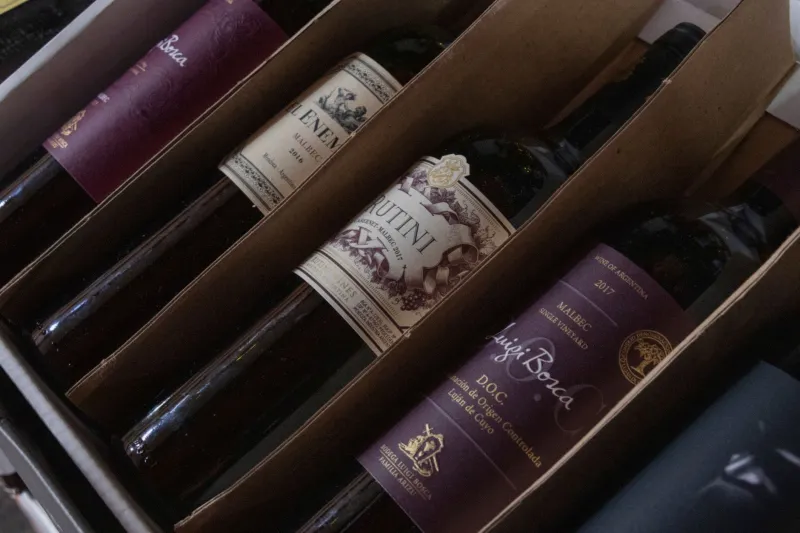
This is why professional sommeliers and critics are meticulous about tasting order — a subject covered in depth elsewhere on this site — but it is equally relevant for casual home tasting. If you are working through a mixed case or comparing several bottles at once, the wines you open last will almost certainly receive less accurate assessments than those you opened first, unless you actively manage your palate between pours.
Practical Techniques to Reset and Recalibrate
Fortunately, the palate is not a fixed instrument. It responds to deliberate intervention.
Water is your most reliable tool. Still, neutral-temperature water between sips clears residual acidity and tannin from your mouth, partially resetting your baseline. Sparkling water, despite its popularity as a palate cleanser, introduces its own acidity and can interfere with the next wine's initial impression. Still water is the professional standard for a reason.
Plain unsalted crackers or bread serve a similar function, absorbing residual tannins and fats while providing a neutral starch baseline. This is why a simple bread basket appears at virtually every serious tasting event.
Time matters more than most drinkers allow. If a wine strikes you as closed or difficult on first pour, set the glass aside for five to eight minutes before returning to it. The change in your perception will often be significant enough to revise your initial judgment entirely.
Revisit your first glass after pouring a second. The comparative exercise of tasting wine A, then wine B, then returning to wine A is one of the most illuminating techniques available to any taster. What registered as austere in isolation may reveal itself as elegantly structured once your palate has had the context of a second wine.
Limit your evaluation window. Beyond ninety minutes of active tasting, receptor fatigue becomes significant enough to compromise accuracy for most people. If you are conducting a serious comparative tasting at home, keep the session focused and the number of wines to a manageable range — ideally six or fewer.
Tasting Honestly Over Time
The deeper implication of all this is that wine evaluation is not a single moment. It is a process that unfolds over the course of a glass, a session, and even across repeated encounters with the same bottle on different occasions. The taster who commits irrevocably to a first impression is working with the least reliable data available to them.
At Bebo Vino, we believe that learning to taste well is fundamentally about developing patience — patience with the wine, patience with your own sensory system, and patience with the process of building genuine perceptual skill over time. The first sip is an introduction, not a verdict. Give the wine, and yourself, the time to arrive at something more honest.