Off the Clock: What Wine Professionals Actually Pour for Themselves at Home

There is a persistent assumption among wine enthusiasts that sommeliers go home each evening to meticulously curated cellars, pouring grand cru Burgundy with dinner and debating vintage charts over dessert. The reality, according to many of the country's most respected wine professionals, is considerably more relaxed — and far more instructive for the rest of us.
When the professional obligation to evaluate, recommend, and educate is removed, the decision-making process that wine experts apply to their own purchases tells a very different story about what wine knowledge actually produces in practice.
The First Rule: Expertise Breeds Simplicity
Ask a working sommelier what they reach for on a Tuesday night and you will rarely hear a celebrated appellation. More often, you will hear about a $22 Beaujolais they discovered on a buying trip, a Sicilian red from a small importer that nobody else has stocked yet, or a Portuguese white that costs less than a cocktail at the restaurant where they work.
This is not false modesty. Wine professionals spend their working hours engaging with complexity — analyzing structure, identifying faults, navigating vintage variation. By the time they are cooking dinner at home, many of them actively seek the opposite of complexity. They want something honest, immediate, and unpretentious. The professional palate does not require a challenging wine to feel satisfied; it requires a good one.
The shortcut here is significant: deep wine knowledge often results in a preference for value and transparency over prestige. Experts know exactly what they are paying for, which makes them acutely resistant to spending money on a name rather than a liquid.
Regional Obsessions That Never Make the Wine List
One of the more revealing patterns among wine professionals is the tendency to develop fierce, almost private loyalties to regions that do not appear on mainstream restaurant lists or in the pages of major American wine publications.
A sommelier whose professional life revolves around French and Italian classics may spend her personal budget almost entirely on wines from the Jura, the Canary Islands, or the Finger Lakes. A winemaker in Napa may drink almost nothing from California at home, preferring instead the cool-climate Rieslings of the Mosel or the structured reds of Greece's Naoussa region.
These obsessions are not contrarianism for its own sake. They reflect something genuine: when professionals are freed from the obligation to meet customer expectations or satisfy a price-point matrix, they gravitate toward wines that genuinely excite them intellectually and sensorially. Often, those wines come from places that the broader market has not yet priced according to their quality.
For American wine buyers, this pattern offers a practical lesson. The regions that wine professionals explore on their own time — and their own dime — are frequently where the most compelling value in the current market resides.
The Vintage Indifference Factor
Another counterintuitive habit among working wine professionals is a striking indifference to vintage variation when shopping for everyday bottles. This seems to contradict everything the wine world teaches consumers — that vintage charts matter, that years should be studied, that the wrong harvest can ruin a producer's output.
And yet, many sommeliers will readily admit that for wines under a certain price threshold, they rarely check the vintage before purchasing. The reason is nuanced: at the level where they shop for themselves, producer consistency and winemaking philosophy matter far more than a single year's weather patterns. A trusted grower in Muscadet or a reliable cooperative in Côtes du Rhône will deliver a dependable, enjoyable wine across most vintages. Scrutinizing the year is, for these bottles, largely a performance of expertise rather than a meaningful exercise.
This is not universally true — for cellar-worthy bottles or wines from regions with significant vintage variation, professionals apply rigorous attention. But the casual vintage obsession that many American consumers feel pressured to perform at retail is, by most accounts, unnecessary for the wines most of us drink most of the time.
Buying by the Case, Drinking by the Case
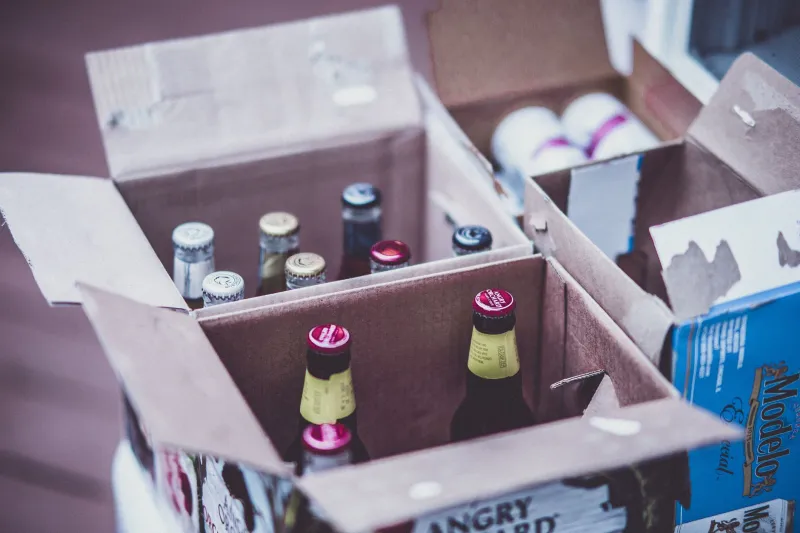
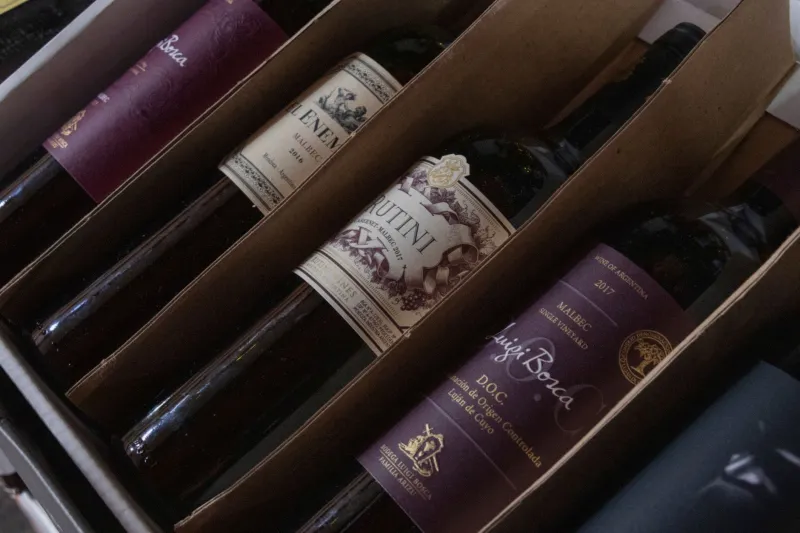
Perhaps the most practical habit separating professional wine consumption from amateur is the commitment to buying in volume. Sommeliers, buyers, and winemakers almost universally purchase by the case when they find something they love — not because they are wealthy, but because they understand the economics.
Case discounts at retail (typically ten to fifteen percent in most states) make the per-bottle cost of a $20 wine meaningfully lower. More importantly, buying in bulk removes the decision fatigue of constantly choosing what to open. When you have twelve bottles of something you already know you enjoy, the barrier to opening wine on an ordinary weeknight disappears entirely.
For consumers who have found a producer or a style they reliably enjoy, this approach is one of the most underutilized strategies available. It requires a degree of commitment, but it rewards that commitment with both savings and convenience — two things that professional wine buyers consider essential.
The Importer as Compass
One of the clearest shortcuts wine professionals use when shopping for themselves is navigating by importer rather than by region, grape, or producer. In the American market, a small number of importers have built reputations for discovering and championing genuinely distinctive wines from around the world — bottles that would never appear in a large distributor's catalog.
For professionals who know which importers share their aesthetic sensibility, this becomes a powerful filter. Rather than researching individual producers, they scan a back label for a familiar importer name and make their purchase with a high degree of confidence. The importer's track record becomes a proxy for quality.
American wine buyers who develop their own awareness of respected importers — whose names appear on the back labels of bottles they have consistently enjoyed — gain access to the same shortcut. It is one of the most transferable pieces of professional knowledge available, and it requires no formal training to apply.
What This Means for How You Buy
The off-duty habits of wine professionals are not a secret code available only to insiders. They are a coherent set of principles that emerge naturally from genuine engagement with wine over time: prioritize producer integrity over regional prestige, explore unfamiliar regions where value outpaces reputation, trust the importer whose track record you know, buy in volume when you find something you love, and resist the anxiety of vintage obsession for everyday bottles.
At Bebo Vino, we believe that wine knowledge should ultimately simplify your relationship with what's in the glass — not complicate it. The professionals who have spent decades inside this world have largely arrived at the same conclusion. The best bottle for a Tuesday night is rarely the most celebrated one. It is the one you already know you enjoy, bought from someone whose judgment you trust, at a price that makes opening it feel effortless.
That, more than any tasting note or vintage chart, is the real sommelier's shortcut.