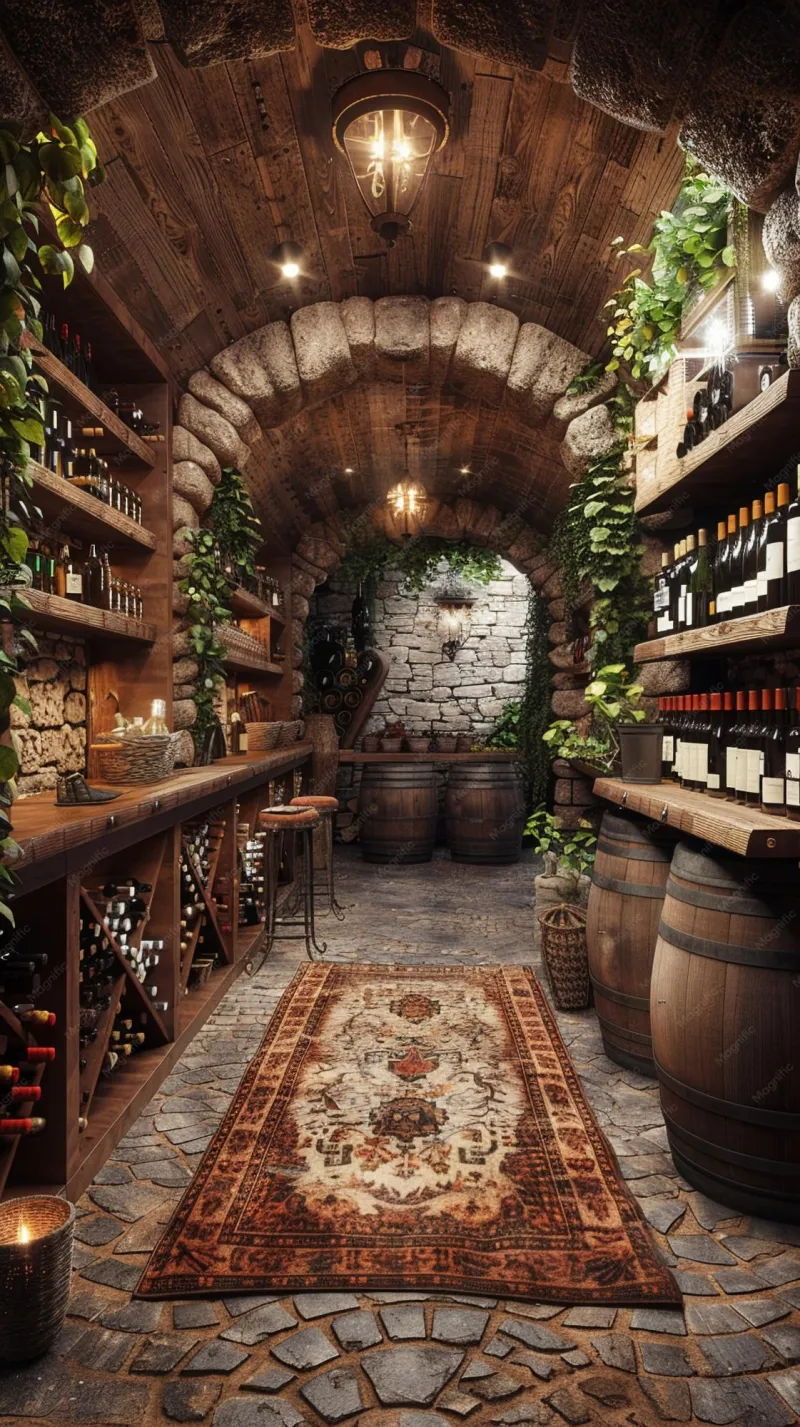
What You're Really Paying For When You Order Wine at a Restaurant

Photo: jean-louis Zimmermann, CC BY 2.0, via Wikimedia Commons
You've been there. You flip to the back of a restaurant wine list, recognize a label you've purchased before, and feel a quiet jolt of sticker shock. The bottle sitting in your kitchen cost $22. Here, it's listed at $68. The wine is identical. So what exactly changed between the vineyard and your table?
The answer involves a chain of economic forces that most diners never see — and understanding it can fundamentally change how you approach both restaurant wine lists and your home purchasing habits.
The Baseline: How Retail Wine Pricing Actually Works
Before examining restaurant markups, it helps to understand how a bottle is priced at the retail or direct-to-consumer level. By the time a wine reaches a retailer's shelf or an online platform's catalog, it has already absorbed the producer's costs — farming, harvesting, fermentation, aging, bottling, and packaging — along with a distributor's margin, typically ranging from 25 to 35 percent above the producer's price. The retailer then adds their own margin, generally between 30 and 50 percent.
For a bottle with a wholesale cost of $10, a retail price in the $15–$18 range is entirely standard. Direct-to-consumer platforms can sometimes offer more competitive pricing by shortening or eliminating segments of that distribution chain, depending on state regulations.
This is the baseline. Restaurants begin here — and then apply an entirely different set of calculations.
Why Restaurants Mark Up Wine So Aggressively
The industry standard for restaurant wine markup is two to three times the wholesale cost, though it is not uncommon to see markups of four times or more on premium bottles at fine dining establishments. On a wine that a retailer sells for $20, a restaurant might list it at $55 to $75.
Several legitimate cost pressures drive this:
Licensing and compliance. Restaurants must obtain liquor licenses, which vary dramatically by state. In highly regulated markets, these licenses can cost thousands of dollars annually. The cost of maintaining legal compliance — including staff training requirements in many states — is built into every glass poured.
Inventory carrying costs. Unlike a retailer who turns over inventory quickly, a restaurant holds wine as a depreciating asset. Storage, insurance, spoilage from opened bottles, and the capital tied up in a cellar all factor into pricing.
Labor and service infrastructure. When a sommelier presents a bottle, decants it, and ensures it is served at the correct temperature, that expertise and attention carry a cost. So does the glassware, the table service, and the ambient environment around the experience.
The cross-subsidy reality. Restaurants in the United States frequently operate on food margins of 3 to 9 percent. Beverage — particularly wine — is often expected to carry a disproportionate share of the overall profitability of the business. In practical terms, your wine markup helps pay for the bread service, the expediter in the kitchen, and the busser refilling your water.
The Three-Tier System and Its Role in the Price Gap
Americans pay more for restaurant wine than diners in many other countries, and part of the reason is structural. The United States operates under a three-tier alcohol distribution system — producer, distributor, retailer/restaurant — that was established after Prohibition and remains largely intact today. Every transaction between tiers involves a margin, and restaurants sit at the end of that chain.
Some states have moved to allow direct-to-consumer wine shipping, which creates an alternative path that can bypass one or more tiers. Where permitted, this model allows producers and curated platforms to offer wines at prices that more accurately reflect the actual cost of making and delivering the bottle — without the accumulated markups of a multi-tier distribution chain.
How to Navigate a Restaurant Wine List More Strategically
Knowing the economics doesn't mean avoiding restaurant wine altogether. It means making more deliberate choices.
Look toward the middle of the list. Restaurants tend to apply the highest percentage markups to their entry-level wines, where consumers are least likely to comparison shop. Mid-tier bottles often carry slightly more reasonable markups in absolute terms.
Seek out lesser-known producers. A recognizable label is a known quantity — and restaurants know you know the retail price. Wines from emerging regions or smaller producers are harder to benchmark, and sommeliers often have genuine enthusiasm for them. They also frequently represent better value relative to their quality.
Consider the by-the-glass pricing. A glass of wine is typically priced to recoup the cost of the entire bottle. If a restaurant pours four glasses from a bottle they sell by the glass at $16, they've already covered the wholesale cost of the bottle before the second table orders a round. That said, by-the-glass programs give you the ability to try multiple wines without committing to a full bottle.
Ask questions. A knowledgeable server or sommelier can often guide you toward bottles that over-deliver for their list price. Restaurants with serious wine programs frequently have staff who are genuinely invested in helping you find value.
The Direct-to-Consumer Advantage for Home Drinking
For wine consumed at home, the calculus is different — and considerably more favorable to the buyer. Direct-to-consumer platforms provide access to curated selections at prices that reflect a leaner supply chain, often accompanied by tasting notes and educational context that help you make informed decisions without relying on a wine list's sparse descriptions.
Building a home collection through a platform with transparent sourcing and pricing means you are paying for the wine — not the real estate, the licensing, the glassware, or the ambient lighting. That doesn't diminish the restaurant experience; it simply means you understand what each model is actually selling.
The next time you see a familiar label priced at three times what you paid for it online, you'll have a clearer picture of where the difference went. And that knowledge, more than any particular bottle, is genuinely worth something.