Forget the Formula: How Understanding Flavor Science Unlocks Better Wine Pairings
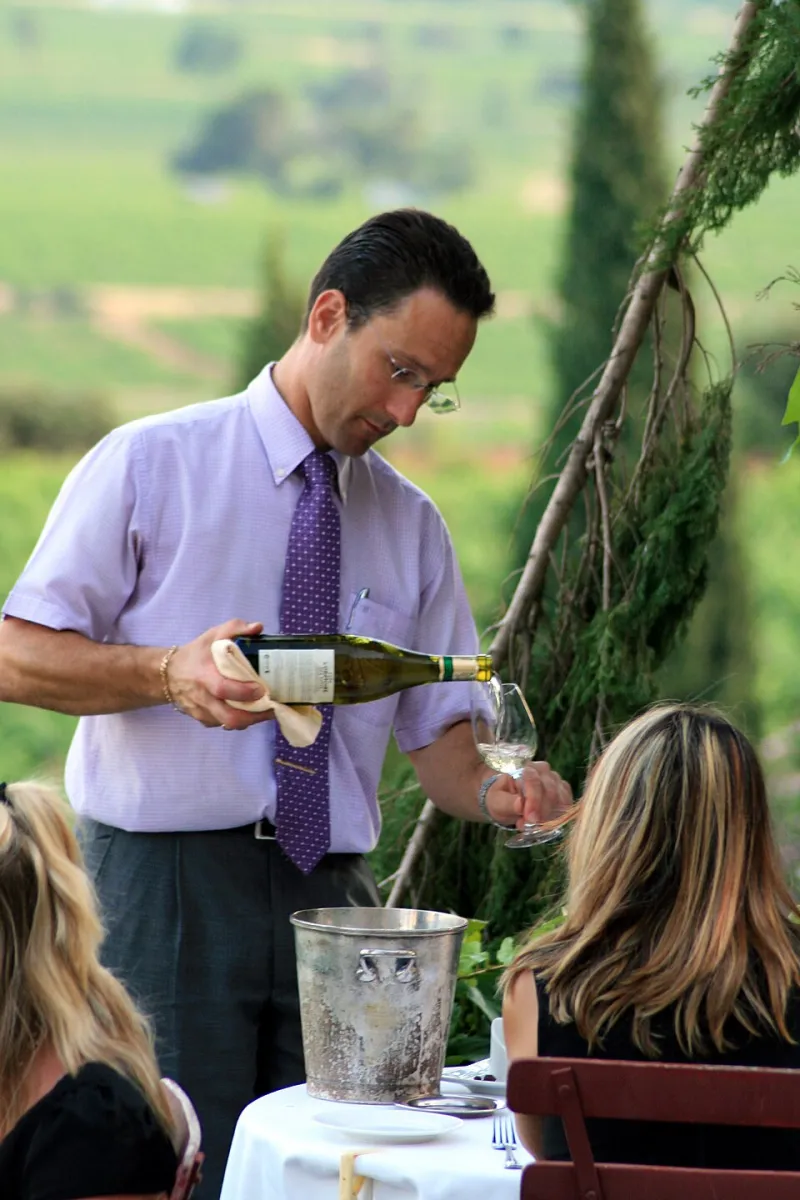
Photo: jean-louis Zimmermann, CC BY 2.0, via Wikimedia Commons
For decades, American wine drinkers have been handed the same set of commandments: white wine with fish, red wine with red meat, never pour a tannic Cabernet alongside delicate shellfish. These guidelines have their uses — they offer a safe harbor for the uninitiated — but they also have a quiet cost. They discourage experimentation, and in doing so, they deprive curious drinkers of some of the most electrifying experiences a glass of wine can offer.
The sommeliers reshaping American dining rooms are operating from a different playbook. Rather than consulting a chart, they are asking a more fundamental question: why do certain combinations work? Once you understand the underlying chemistry and sensory logic, the rulebook becomes optional.
What Is Actually Happening on Your Palate
When wine and food meet in your mouth, you are not simply tasting two things simultaneously. You are witnessing a cascade of chemical interactions that can amplify, suppress, or transform individual flavor compounds in both the food and the wine.
Consider tannins — those grippy, drying polyphenols found in red wines like Cabernet Sauvignon and Nebbiolo. Tannins bind to proteins. When you eat a well-marbled steak, the fat and protein in the meat literally absorb the tannin, softening the wine's astringency and allowing its fruit character to emerge. That is not culinary folklore; it is biochemistry. The pairing works because the food changes the wine's structure in real time.
Acidity operates by a different mechanism. A high-acid wine — think Sancerre, Vermentino, or a lean Pinot Grigio from Alto Adige — acts almost like a palate cleanser, cutting through richness and resetting your taste receptors between bites. This is why a crisp Chablis alongside a buttery lobster bisque creates such a satisfying tension: the wine's acidity keeps the dish from feeling heavy.
Sweetness in wine, meanwhile, can tame heat. This is the science behind the beloved pairing of an off-dry Riesling with spicy Thai or Sichuan cuisine — a combination that violates the "white wine is for delicate dishes" rule spectacularly and deliciously.
Where the Old Rules Fall Short
The conventional framework was largely built around European cuisine, and more specifically, around the regional traditions of France and Italy. It made practical sense at the time: the wines of Burgundy evolved alongside the food of Burgundy. But American diners eat differently. A typical weeknight dinner in the US might involve Korean barbecue, a Tex-Mex spread, Vietnamese pho, or a Detroit-style pizza loaded with pepperoni and fermented hot honey.
None of these dishes appear in the classic pairing canon, and yet each one has a wine that meets it beautifully — if you know what to look for.
"The question I always ask is: what is the dominant flavor force in this dish?" says one sommelier working at a progressive New American restaurant in Chicago. "Is it fat, acid, salt, heat, or umami? Once I identify that, I look for a wine that either echoes or counterbalances it. The cuisine's origin is almost irrelevant."
This approach — identifying the dish's dominant sensory driver rather than its cultural category — is quietly becoming standard practice among forward-thinking beverage professionals.
Unexpected Pairings That Actually Work
Here are several unconventional combinations grounded in flavor science, not tradition:
Champagne and Fried Chicken. This pairing has become something of a cliché in food media, but it endures because it works. The wine's effervescence and high acidity slice through the fat of the fried coating, while its yeasty, toasty notes complement the browned, savory crust. The contrast is joyful and the science is sound.
Dry Amontillado Sherry and Miso Soup. Both the wine and the broth are rich in glutamates — the compounds responsible for umami. Rather than competing, they reinforce each other, creating a depth of savory flavor that neither achieves alone. Sherry remains criminally underutilized in American homes, and this pairing illustrates exactly what is being missed.
Lambrusco and Pepperoni Pizza. The slight sweetness and vivid acidity of a quality Lambrusco Grasparossa cut through the salt and fat of cured meat while the wine's gentle fizz keeps the palate refreshed. It is a pairing that sounds casual but is genuinely well-engineered.
Gewürztraminer and Indian Butter Chicken. The wine's lychee and rose petal aromatics mirror the floral spice notes in the dish, while its low tannin and moderate acidity avoid clashing with the tomato-cream sauce. This is a pairing that would never appear in a traditional guide, yet it is one of the most cohesive flavor experiences available to a home cook.
A Framework for Building Your Own Pairings
Rather than memorizing a new set of rules, consider adopting a simple analytical process:
- Identify the dish's dominant sensory element. Is the primary experience richness, acidity, heat, saltiness, or sweetness?
- Decide whether to complement or contrast. Rich dishes can be met with equally rich wines (complementary) or cut with high-acid, leaner wines (contrasting). Both strategies work; the choice depends on the effect you want.
- Consider weight and intensity. A delicate wine will be overwhelmed by an assertive dish, and vice versa. Match the volume of flavor, not necessarily the flavor itself.
- Account for the cooking method. Raw preparations tend to need fresher, lighter wines. Roasted, braised, and smoked dishes can handle more structure and oak.
- Trust your palate above all else. Food science provides a framework, but your sensory experience is the final arbiter.
The Confidence to Experiment
Perhaps the most valuable thing a wine drinker can internalize is that a "wrong" pairing is rarely catastrophic. At worst, the wine tastes a bit flat or the food seems slightly off. At best, you stumble onto something genuinely extraordinary that no chart would have led you to.
The sommeliers who are most admired in American dining today are not the ones who enforce orthodoxy. They are the ones who approach every bottle and every dish with genuine curiosity — who see pairing not as a compliance exercise but as a creative act.
At Bebo Vino, we believe that curiosity belongs in every home, not just in Michelin-starred dining rooms. Explore our curated selections with this framework in mind, and you may find that the most memorable glass you have ever poured was the one you were never supposed to pour at all.