How to Order Wine at Any Restaurant Without the Anxiety
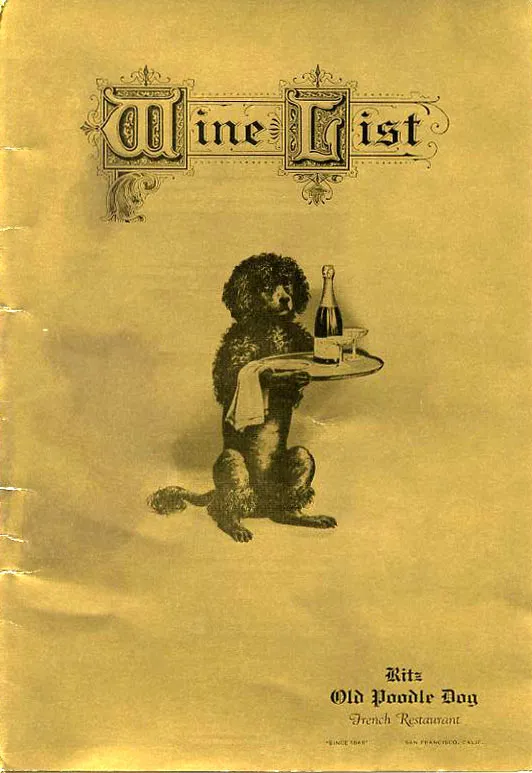
Photo: California Historical Society Digital Collection, No restrictions, via Wikimedia Commons
You have been there. The server places the wine list in front of you, the table turns expectantly, and suddenly a laminated booklet of unfamiliar names feels like a final exam. You scan for something recognizable, point to a mid-priced bottle that sounds vaguely French, and spend the next ten minutes wondering whether you made the right call.
Wine anxiety is a genuinely common experience, and it has very little to do with intelligence or taste. It has everything to do with a vocabulary and cultural framework that most Americans were never taught. The good news is that ordering wine with confidence does not require years of study or an encyclopedic knowledge of appellations. It requires a handful of practical strategies and the willingness to ask a few simple questions.
Understand What a Wine List Is Actually Trying to Do
Before you can read a wine list strategically, it helps to understand what it represents. A restaurant's wine list is a curated selection — someone made deliberate choices about what to include, how to organize it, and how to price it. In most mid-range to upscale American restaurants, that someone is a sommelier or a beverage director with genuine expertise.
This means the list is not a trap. It is an invitation. The wines on it have been chosen because they pair well with the menu, represent good value at their price points, or offer something interesting to the right guest. Your job is not to decode the list independently — it is to use it as a starting point for a conversation.
Most wine lists are organized by country or region, then by varietal or style. If you see a section labeled "Burgundy," that refers to a region in France producing primarily Pinot Noir (red) and Chardonnay (white). If you see "Côtes du Rhône," that is typically a Grenache-based red blend from southern France. You do not need to memorize this geography — but knowing that geographic names on a wine list almost always correspond to grape varieties can help you orient yourself.
The Three Questions That Change Everything
If you take nothing else from this article, take this: there are three questions you can ask any knowledgeable server or sommelier that will immediately improve your wine-ordering experience.
"What do you enjoy drinking from this list?" This question accomplishes two things simultaneously. It signals that you are open to recommendations, and it invites a personal, genuine response rather than a rehearsed upsell. A server who loves wine will light up at this question. Even one who is less passionate will typically point you toward something reliable.
"We're thinking of ordering the [dish]. What would you pair with that?" Food-driven wine recommendations are among the most useful a server can offer, and most trained staff are prepared for exactly this question. You do not need to know anything about the wine they suggest — you just need to know what you plan to eat.
"Is there anything on this list that offers particularly good value?" This question is not embarrassing. It is sophisticated. Sommeliers respect guests who think carefully about value, and they almost always have an opinion about which bottles on the list are priced fairly versus which are inflated by brand recognition.
How to Communicate Your Preferences Without Wine Vocabulary
One of the most persistent myths about ordering wine is that you need technical language to communicate effectively. You do not. What you need is the ability to describe what you enjoy in plain terms — and the confidence to do so.
Consider the following translations:
- "I like wines that aren't too dry" → You prefer wines with some residual sweetness or very ripe fruit. A knowledgeable server will steer you toward off-dry Rieslings, Viogniers, or fruit-forward reds like Malbec or Zinfandel.
- "I don't like wines that feel heavy or tannic" → You are looking for lighter-bodied reds or crisp whites. Think Pinot Noir, Gamay, Grenache on the red side; Sauvignon Blanc or Pinot Grigio on the white side.
- "I usually drink Cabernet but I want to try something new" → This tells a sommelier you enjoy structure and dark fruit, and opens the door to Malbec from Argentina, Tempranillo from Spain, or a Syrah from Washington State.
- "I prefer white wine but I'm open to something unusual" → An invitation for a sommelier to introduce you to orange wine, skin-contact whites, or an unexpected variety like Grüner Veltliner or Albariño.
The goal is not to use the right words. The goal is to give the person helping you enough information to make a good match.
Reading the Price Column Strategically
Price anxiety is a significant component of wine anxiety, particularly when dining with others. A few practical principles can help.
In most American restaurants, the second-least-expensive bottle in any given category tends to offer the best relative value. Restaurants know that budget-conscious guests often avoid the cheapest option to avoid appearing cheap — so the least expensive wine is frequently marked up the most aggressively. The second bottle typically represents a more honest price-to-quality ratio.
If you are hosting a business dinner or a celebration where the budget is genuinely flexible, do not feel compelled to order the most expensive bottle on the list. Price and quality do not scale linearly on a restaurant wine list. A $90 bottle is not necessarily three times better than a $30 bottle — it may simply be a more prestigious label with a higher wholesale cost.
When dining with a group and unsure of everyone's preferences, ordering by the glass for the first round is a perfectly reasonable strategy. It allows the table to sample before committing to a full bottle, and it removes the pressure of a single decision representing everyone's evening.
What to Do When the Wine Arrives at the Table
The tableside ritual of presenting and tasting a bottle of wine intimidates many guests unnecessarily. When the server pours a small amount for you to taste, they are not asking for your aesthetic judgment — they are asking you to confirm that the wine is not flawed.
You are checking for three things: an off-putting vinegar smell (a sign of acetic acid bacteria), a musty, wet cardboard odor (cork taint, caused by a compound called TCA), or an unusual cooked or sherry-like quality (oxidation). If the wine smells and tastes roughly as expected — even if it is not exactly to your preference — it is sound, and you should accept it.
If something genuinely seems wrong, say so calmly and directly: "I think this bottle may be corked — it has an unusual smell." A good sommelier will smell it themselves and, if they agree, replace it without hesitation.
You are not required to love the wine you ordered. You are only required to confirm it is not defective.
The Confidence You Already Have
Here is the truth that wine professionals rarely say loudly enough: your palate is already valid. You have been tasting food and beverages your entire life. You know what you find pleasant, what feels too sharp, what seems balanced. That accumulated sensory experience is the foundation of wine appreciation — not a list of memorized appellations.
Ordering wine with confidence is not about knowing more than the sommelier. It is about being honest about what you enjoy, curious about what you have not tried, and willing to ask for help. Every great wine experience begins with exactly that.